
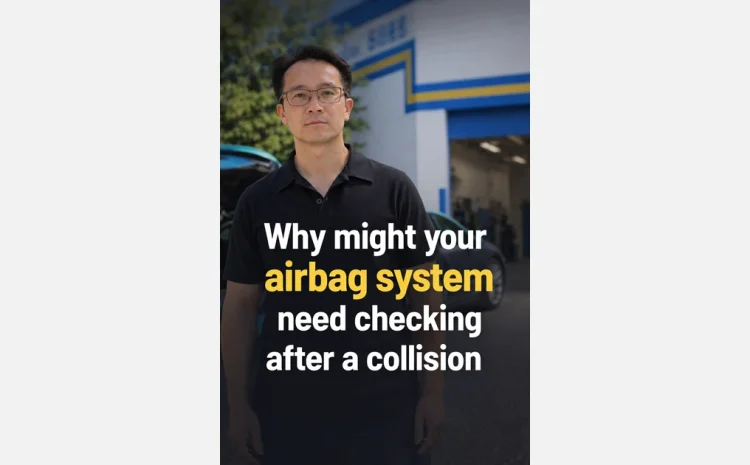
Should Richmond airbags be checked after a collision?
An airbag system can need checking after a collision even when no bag opened. A hit can disturb a crash sensor or its mounting point without obvious signs in the cabin. For Richmond drivers, a warning light that remains on is an important reason to seek professional service before treating the system as ready.
Why can a quiet cabin hide an airbag concern?
Transport Canada (page last updated September 2014) says an airbag readiness light that stays on or comes on while driving means the system may not work properly, so the airbags might not deploy in a crash, and the vehicle should be serviced right away (Government of Canada).
An airbag system does more than hold the bags inside the steering wheel and cabin. It relies on crash sensors, mounting locations and a control module to interpret what happens during an impact. Damage around those parts may not be visible from the driver’s seat.
A collision can affect a bumper reinforcement or shift the place where a sensor is attached. The outside damage may look limited, while the parts that help the system respond have been disturbed. The fact that no bag opened does not, by itself, confirm that every part is ready.
Not every collision causes an airbag fault, but a visual glance cannot answer whether the sensing equipment and its mounting points remain in the intended condition. A professional airbag system inspection focuses on that question without asking the owner to handle safety components.
What does the airbag warning light tell you?
Watch the airbag readiness light when the vehicle starts and while it is being driven. Transport Canada’s warning-light guidance explains why this matters (Government of Canada).
A warning light provides useful information, but it does not explain the cause by itself. Have a qualified professional assess the system instead of guessing from the appearance of the bumper, dashboard or steering wheel.
Do not unplug, reset or test airbag parts yourself. These components are connected to a safety system, and an owner may not be able to see whether a sensor, connector, module or mounting point has been affected.
If a light appeared after the collision, mention when it started and whether it stays on. That detail can help the repair conversation stay focused on the warning and the impact instead of assuming that an undamaged-looking cabin proves the system is fine.
How should an inspection fit into collision repair?
An airbag system inspection should be considered alongside the visible collision damage. The inspection is not a substitute for repairing dents or replacing damaged exterior parts. It addresses a separate question: whether the airbag-related equipment needs professional assessment after the impact.
Manufacturer repair information matters because airbag-related parts can be tied to the way a vehicle is put back together. ICBC’s program guide (section 4.5) says participating shops must follow manufacturer repair procedures for structural panel repair or replacement and for parts related to airbag (SRS) and driver-assistance (ADAS) systems (ICBC).
That guidance shows why a general visual repair approach is not enough for every vehicle. The correct process can depend on the vehicle’s manufacturer instructions and the parts affected by the collision. The inspection should therefore be discussed before collision repair is authorized.
For example, a vehicle may have a dented bumper, but no airbag opened and no warning light is obvious. The useful question is not whether the car looks acceptable from the outside. The owner can ask whether the impact could have reached a sensor or its mounting location and whether the manufacturer’s repair information has been considered.
For example, the light may stay on after the vehicle is started. The absence of a deployed bag does not settle the issue. The owner should record the warning, avoid experimenting with the system and have the concern assessed as part of the collision-related work.
What should drivers ask before approving work?
Start with clear questions about the airbag system inspection. Ask whether the collision damage has been reviewed for possible effects on sensors and mounting points. Ask what warning-light information should be noted. These questions help separate visible body damage from safety-system concerns.
You can also ask which manufacturer repair procedures apply to the airbag-related parts involved. The program guide mentioned above requires participating shops to follow those procedures (ICBC). Before approving ICBC collision repair, ask the shop to walk you through the plan.
Keep the conversation specific to the vehicle and the collision. A small-looking impact, a bumper concern and a warning light do not automatically describe the same repair situation. The inspection is intended to establish what needs attention rather than assume that every vehicle has the same issue.
For Richmond owners, this approach can make a collision discussion easier to follow. You do not need to diagnose the system yourself. You need to share what happened, note any warning-light behaviour and ensure that airbag-related concerns are considered by a qualified repair professional.
The key point is simple: airbags that did not deploy are not proof that no checking is needed. A professional airbag system inspection can help determine whether the collision affected the equipment that supports the system’s response, while keeping the owner away from hands-on testing. Source details are current as of October 2026.
Frequently asked questions
Should airbags be checked after a collision?
Yes. Even when no airbag opens, a collision may affect a sensor or its mounting point, so the system should be considered during professional assessment. Transport Canada’s warning-light guidance explains why a readiness light should not be ignored (Government of Canada).
Can an airbag system problem be visible from inside the car?
Not always. Sensors, mounting points and related equipment can be affected without an obvious change in the cabin, so appearance alone cannot confirm that the system is ready.
What if the airbag readiness light stays on?
Have a qualified professional assess the vehicle promptly. Transport Canada advises service right away when the readiness light stays on (Government of Canada).
Can I unplug or reset airbag parts myself?
No. Do not test, unplug or reset airbag components yourself. Airbag-related assessment and repair should be handled by a qualified professional.
Read more about airbag system inspection from Bridgeport Collision.
Questions about airbag system inspection? Text 778-522-2188 or visit bridgeportcollision.com.
This post is general information, not legal, insurance or financial advice. ICBC rules, amounts and your own policy terms may differ and can change. Check your policy and ask ICBC or a licensed repair shop about your situation. For your own situation, contact Bridgeport Collision directly.
This article was written with AI. The video is presented by an AI avatar.