
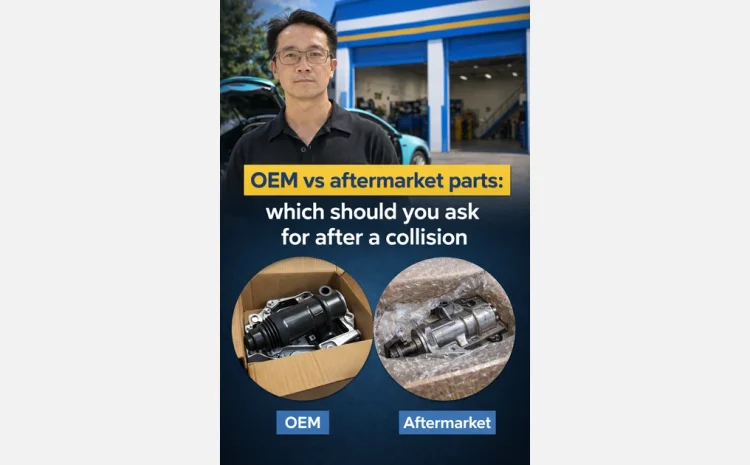
OEM vs aftermarket parts: which is better?
It depends on your vehicle, lease rules, insurance contract, and the repair choice. OEM parts come from the vehicle maker; aftermarket parts are made by independent producers for the model. In Richmond, ask that the estimate identify each part clearly, then compare fit, cost, policy requirements, and vehicle age before approving collision repair.
What is the difference between OEM and aftermarket parts?
OEM means Original Equipment Manufacturer. These parts are made for the vehicle maker and are generally selected when an owner wants the same type of component used in the original build.
Aftermarket parts come from independent manufacturers. They are designed to fit a particular vehicle model, but the maker is different from the company that produced the vehicle itself.
The label alone does not answer whether a part is suitable for your repair. The right comparison should include the component, the manufacturer, the expected fit, the vehicle’s age, and the terms of your insurance contract.
When might OEM parts make more sense?
OEM parts are often considered for newer vehicles because owners may place a higher priority on matching the original equipment. They can also be a practical preference when preserving the vehicle’s original specifications matters to the owner.
A leased vehicle deserves extra attention. Its return rules may require particular replacement parts, so the lease agreement should be checked before authorizing collision repair. Insurance coverage still matters because the insurer’s contract determines what it will consider for the claim.
Luxury, exotic, and electric vehicles may also lead owners to ask detailed questions about matching the original component. That does not automatically settle the decision, but it makes a clear parts discussion especially useful.
When might aftermarket parts be considered?
Aftermarket parts may be considered when the vehicle’s age, repair budget, and policy rules make that option appropriate. Their lower cost can be relevant, although the quality and fit can differ between manufacturers.
An estimate should identify whether each listed component is OEM or aftermarket. That detail lets you discuss the choice instead of discovering the part type later in the repair process.
ICBC requires repair facilities to meet its performance standards when aftermarket parts are used, and any certified-part stickers must remain intact (ICBC). This gives the parts discussion a specific standard to review rather than making it only a matter of preference.
How do insurance and claim rules affect the choice?
Your insurance policy is central because coverage is based on the specific contract. Before approving collision repair, review whether the policy addresses OEM parts, aftermarket parts, part categories, or other conditions that could affect the estimate.
Cost is not the only consideration. ICBC says repair participants should use the most cost-effective parts while considering the net claim cost, including delivery delays and the effect of being without the vehicle (ICBC).
That approach means a part decision can involve more than the purchase price. A less expensive component may not be the only option worth discussing if delivery timing or vehicle-use concerns change the overall picture.
What should you ask before approving the estimate?
Start by asking the repair facility to identify every replacement component as OEM or aftermarket. If the estimate uses general wording, request clarification before signing or authorizing the work.
Ask why the proposed part fits your vehicle, whether your insurer has guidelines, and whether lease requirements apply. You can also ask what information is available about the aftermarket manufacturer and how the part will be checked against the vehicle.
Suppose a leased vehicle needs a bumper after a collision. The owner should review the lease requirements, check the insurance contract, and compare the estimate’s listed part type before approval. That example does not make OEM mandatory in every case; it shows why the documents matter.
Suppose an older vehicle needs a replacement panel and the owner is balancing cost with a clean match. The useful conversation is about the available component, the estimate, the policy, and the owner’s priorities rather than choosing solely from the label. Source details are current as of October 2026.
Frequently asked questions
OEM vs aftermarket parts: which is better?
It depends on the vehicle, lease terms, insurance contract, and the specific repair. OEM may suit an owner seeking original-equipment matching, while an appropriate aftermarket part may suit another situation.
Are aftermarket parts automatically poor quality?
No. Aftermarket parts are made by independent companies, and quality can vary by manufacturer. The estimate and repair discussion should identify the part clearly so its suitability can be considered.
Can my insurer require aftermarket parts?
It depends on the insurance contract and claim guidelines. Review the policy and ask which parts are being proposed before authorizing collision repair.
Should a leased vehicle use OEM parts?
Not always, but the lease agreement may set requirements for replacement parts. Check those terms alongside the insurance contract before approving the estimate.
Read more about collision repair from Bridgeport Collision.
Questions about collision repair? Text 778-522-2188 or visit bridgeportcollision.com.
This article was written with AI. The video is presented by an AI avatar.