
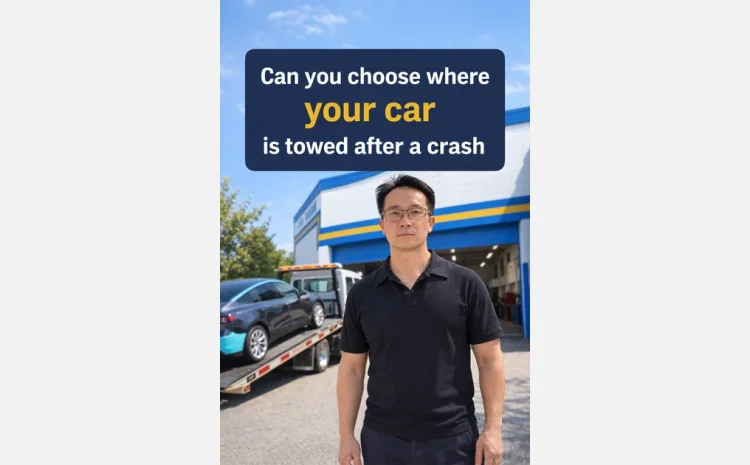
Who decides where your car goes after a crash tow?
It depends. After a crash in Richmond, police or fire crews usually arrange the tow, so the destination is often set at the roadside (ICBC). If emergency crews did not direct the move, ask the tow operator where the vehicle is going and whether you may name your own destination. Avoid signing a blank authorization.
What does it mean when the tow choice depends on the situation?
The key question is who arranged the tow. ICBC says police or fire crews usually do (ICBC). If they did, find out the destination and write it down. If the move was not directed, ask whether you can name the repair facility. This gives you time to identify a facility instead of accepting the first suggestion made at the roadside.
If police are directing the tow, follow the police direction. Ask where the vehicle is being taken, write down the destination, and keep that information with your claim notes. You can then explain the situation to the repair facility you prefer.
A tow operator may arrive before you have had time to think. That does not mean you must approve every destination or repair arrangement offered by the driver. Separate the immediate task of moving the vehicle from the later decision about collision repair.
The safest response is calm and specific. Ask what the tow authorization covers, where the vehicle will be stored, and whether the driver is acting under police direction. If the answers are unclear, pause before signing anything that gives broader permission than you intend.
- Ask whether police are directing the tow.
- Write down the proposed destination.
- Keep towing authorization separate from repair authorization.
- Choose a repair facility without relying on a tow operator’s referral.
What happens if police or fire crews arrange the tow?
ICBC says police or fire crews usually arrange for a local towing company to move a crashed vehicle to that company’s storage facility. The vehicle generally remains there until instructions are given for its removal (ICBC). This is why the destination may not be the shop you would have selected yourself.
Ask which company is handling the vehicle and where its storage facility is located. Record the company name, destination, and any instructions you receive. Those notes can help you explain the vehicle’s location when you begin discussing collision repair.
ICBC also says you can ask whether the towing company belongs to the ICBC Towing Program. After the claim and coverage are confirmed, a participating company may bill ICBC directly. If it is not part of that program, you may need to pay first and submit receipts for reimbursement consideration (ICBC).
That information does not decide where every vehicle can go. It explains how the tow may be handled when emergency crews arrange it and how billing can differ. Your policy, claim details, and insurer’s direction can still affect what happens next.
What should you avoid signing at the roadside?
Do not sign a blank contract or a form you cannot read. Ask the tow operator to identify the company, destination, and services being authorized. If a document combines towing, storage, administration, and repairs, ask which parts you are approving before you sign.
Be cautious if the driver pressures you to authorize towing or repair work immediately. A quick decision may be necessary when the vehicle is obstructing a roadway, but that does not require you to accept a repair-shop referral from the tow company.
Consumer Protection BC says a tow may have been authorized by a municipality, property owner, law enforcement, or another party. It also says the organization does not regulate towing companies, so ask the company for an itemized breakdown of towing, storage, and administrative charges (consumerprotectionbc.ca).
A clear breakdown helps you understand what you are being asked to pay or review. Keep the document, receipt, and notes together. Do not assume that a tow operator’s preferred repair shop is your only option.
Suppose the first tow truck recommends a shop. What should you do?
Suppose the first tow truck arrives and the driver recommends a shop the driver knows. First ask whether police are directing the tow. If they are not, ask whether you can name your own destination. If they are, follow the direction and record where the vehicle is going.
Before authorizing collision repair, tell the tow operator exactly what you are approving. You can authorize transportation without authorizing a repair facility to begin work. If a form uses broad language, ask for a version that clearly separates those decisions.
For a Richmond driver, keeping a preferred repair facility in the phone can make this conversation easier. Save the facility’s name beside your policy information, and keep a written note of any police direction. Preparation can reduce the pressure of making several decisions beside a damaged vehicle.
When discussing collision repair with Bridgeport Collision, bring the tow company’s name, storage destination, claim information, and any instructions you recorded. Those details help keep the conversation focused on where the vehicle is and what you have already authorized.
How can you prepare before a collision happens?
Preparation does not require deciding every detail in advance. Save the name of the repair facility you would prefer to use, along with your policy number. The purpose is to give yourself a clear reference when a tow operator asks where the vehicle should go.
After a crash, write down the tow company’s name and the destination before the vehicle leaves, when circumstances allow. If police direct the move, record their instructions rather than arguing about the destination. You can review the next steps once the immediate roadside situation has settled.
Keep copies of towing documents, storage information, receipts, and authorizations. Ask questions when a charge or permission is unclear. A written record is especially useful when several organizations are involved in moving, storing, assessing, or repairing the vehicle.
The central point is to find out who arranged the tow. If emergency crews did, record the destination. If not, ask whether you can name your own. Either way, make the repair decision separately. Source details are current as of October 2026.
Frequently asked questions
Who decides where your car goes after a crash tow?
It depends. ICBC says police or fire crews usually arrange the tow. If they did, record where the vehicle goes; if not, ask the tow operator whether you can name the destination.
Can a tow truck driver choose the repair shop for you?
A tow operator’s recommendation does not make that shop your required choice. Do not sign a repair authorization simply because the driver suggests a particular facility, and keep towing approval separate from collision repair approval.
What should you ask about towing charges?
Ask for a breakdown of towing, storage, and administrative charges. Consumer Protection BC says it does not regulate towing companies, so reviewing the itemized information is important (consumerprotectionbc.ca).
What if the tow was arranged by police or fire crews?
Find out the vehicle’s destination and record it. ICBC says police or fire crews usually arrange for a local tow to move the vehicle to storage until instructions are given for its removal (ICBC).
Read more about collision repair from Bridgeport Collision.
Questions about collision repair? Text 778-522-2188 or visit bridgeportcollision.com.
This article was written with AI. The video is presented by an AI avatar.