
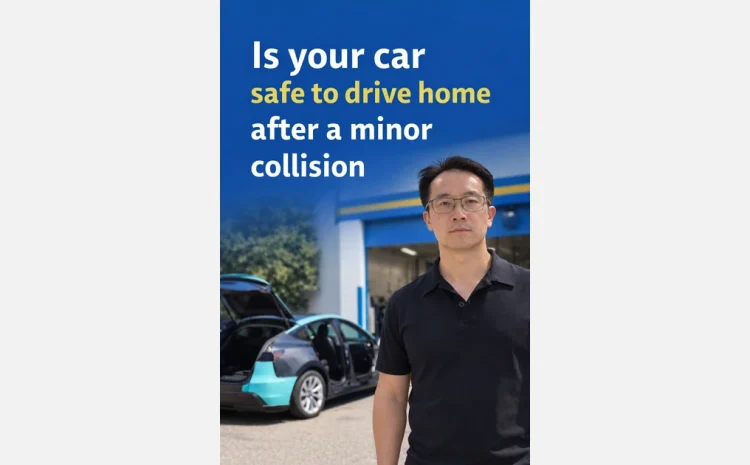
Can I drive my car home after a minor crash?
For Richmond drivers, it depends on what changed in the collision. Before driving, check for leaking fluid, damaged lights or tires, loose body panels, warning lights, steering changes and unusual braking. If an airbag deployed or something feels different, do not continue. When you are unsure, arrange a tow and professional inspection.
What should I check before moving the car?
Start with a calm walk-around while the vehicle is stopped. Look underneath for fluid, inspect each tire for visible damage or rubbing, and check whether the lights still work. A damaged tire, leak or missing light can affect how safely the vehicle operates or how visible it is to others.
Check the hood and any visibly loose panel before entering traffic. The hood should be fully latched, and no piece of bodywork should appear likely to detach. Do not try to secure damaged safety or structural parts yourself; arrange a professional inspection instead.
A short drive is not a test that proves the vehicle is undamaged. A collision can leave a car running normally while changing steering, braking or the operation of a safety system. If anything feels unfamiliar, stop and choose a tow rather than guessing.
- Look for fluid beneath the vehicle.
- Check tires for damage or contact with nearby parts.
- Confirm that lights are intact and working.
- Make sure the hood is latched and panels are not loose.
- Pay attention to warning lights, steering and braking changes.
Which changes mean I should not drive home?
Do not keep driving if an airbag has deployed, the steering pulls, or the brakes feel different from before the collision. These are specific signs that the vehicle needs attention before it returns to traffic. A tow can avoid turning uncertainty into a roadside problem.
Dashboard warning lights that appear after the impact also deserve attention. The airbag readiness light is especially important: Transport Canada’s warning-light page (last updated September 2014) says a light that remains on after starting may mean the airbags will not deploy as intended in another collision, and advises prompt diagnosis and repair by a dealer or licensed auto repair facility. (Government of Canada)
A single damaged headlight can matter even when the engine starts and the vehicle moves. Suppose a low-speed bump leaves one headlight out at night; other road users may have more difficulty seeing the car, so towing may be the more sensible option.
- An airbag has deployed.
- The steering pulls or the vehicle does not track normally.
- The brakes feel different.
- A warning light stays on after the collision.
- A light, tire or panel is damaged enough to affect road use.
Can a car look fine but still need an inspection?
Yes. A clean-looking bumper or a vehicle that drives normally does not answer every safety question. Driver-assistance equipment may need inspection, calibration or aiming after collision or body work, and some of these systems may not show a trouble code unless the system itself has been damaged.
That is why a professional inspection is useful even after a low-speed incident. It can consider visible damage together with steering, braking, restraint and electronic-system concerns rather than relying only on how the car feels during a short trip.
A diagnostic scan can be part of the repair assessment. A collision-repair training group publishes carmaker guidance that describes a preliminary scan during estimating and says that replacing body parts calls for another diagnostic scan after the repair.
Do not attempt to diagnose airbags, sensors, cameras or driver-assistance calibration at home. Those checks belong with an appropriately qualified repair facility. If the collision has affected a safety system, driving away first may not be the right choice.
- Normal engine operation does not rule out collision-related concerns.
- Some driver-assistance systems need inspection, calibration or aiming after repairs.
- A scan is part of assessing certain electronic systems.
- Safety-system diagnosis should be handled professionally.
What should I do if I am uncertain at the scene?
If you cannot confidently clear the basic checks, leave the car where it is safe and arrange a tow. Take photographs of the vehicle and the surrounding position before it is moved when doing so is safe. This preserves useful information while you decide what inspection is needed.
Do not let the word “minor” make the decision for you. A dent, scratch or bumper mark may be mostly cosmetic, but a warning light, damaged tire, missing light or changed vehicle behaviour deserves more attention.
If the car shows no warning signs or changed behaviour, a short, careful trip may be possible, but it is not a substitute for a professional check of the damage. If the vehicle feels even slightly different, ask for a professional look before authorizing collision repair.
For drivers making an ICBC or private insurance claim, document the condition and keep records of what happened. Coverage and claim handling depend on the policy and the insurer, so the claim process does not by itself determine whether the vehicle is ready to drive.
Ask Bridgeport Collision in Richmond what further professional checks it recommends before work is authorized. The immediate priority is choosing the safer next step for the vehicle’s condition.
- Photograph the vehicle and its position when it is safe to do so.
- Use a tow when basic checks do not give you confidence.
- Record warning lights, unusual sounds or changes in handling.
- Remember that insurance decisions depend on the policy and insurer.
Frequently asked questions
Can I drive my car home after a minor crash?
It depends. Drive only when the basic checks show no leak, damaged tire, broken light, loose panel, warning light or change in steering and braking. If you are unsure, arrange a tow and professional inspection.
What if the airbag warning light stays on after a bump?
Have a dealer or licensed auto repair facility diagnose and repair the issue without delay. Transport Canada warns that the airbags may not inflate in a later collision while the readiness light remains on. (Government of Canada)
If the car seems fine, can sensors still be affected?
Possibly. Carmaker guidance published by a collision-repair training group notes that some driver-assistance systems may not show trouble codes unless the system is damaged, so a professional inspection may still be needed.
Should I tow the vehicle if one headlight is broken?
A tow may be the safer choice, especially at night, because a missing headlight can make the vehicle harder for others to see. Consider the damage along with any warning lights, handling changes and other visible problems.
Read more about collision repair from Bridgeport Collision.
Questions about collision repair? Text 778-522-2188 or visit bridgeportcollision.com.
This article was written with AI. The video is presented by an AI avatar.